What Nobody Tells You About Football Strength Training
The best football strength training plan is a position-specific, year-round system that combines maximal strength, explosive power, sprint mechanics, mobility, and recovery rather than chasing gym num...

What Nobody Tells You About Football Strength Training
The best football strength training plan is a position-specific, year-round system that combines maximal strength, explosive power, sprint mechanics, mobility, and recovery rather than chasing gym numbers alone. For 2026 athletes, a practical starting structure is three lifting sessions, two speed or agility sessions, and at least one full recovery day each week. Research from the National Strength and Conditioning Association supports progressive resistance training, while the FIFA Training Centre emphasizes movement quality, acceleration, and repeated high-intensity actions. A useful working split is 3–5 sets of 3–6 repetitions for major strength lifts, 3–5 sets of 2–5 repetitions for power exercises, and 10–20 seconds for short sprint efforts. Start with manageable loads, track bar speed and soreness, and increase training stress gradually instead of copying a professional footballer’s workload.
Imagine discovering that the hardest part of football strength training is not finding another exercise. It is resisting the urge to do everything at once. I learned that after enough hamstring tweaks, pointless “conditioning” sessions, and gym records that looked impressive right up until match day.
At Stadium View, we cover the 2026 World Cup through tactics, player data, predictions, and tournament context. That same evidence-first mindset works in the gym: measure what improves your football, ignore what merely looks heroic, and build around the demands of your position. Believe it or not — I do.

Photo by Franco Monsalvo on Pexels
The Top 5 Football Strength Training Plans at a Glance
Here are five useful approaches, ranked by how well they transfer to football performance rather than how exhausted they leave you. The first option suits most players because it balances strength, power, speed, and recovery across a normal training week. The others become more valuable when your position, season phase, equipment, or injury history changes.
- Full-body athletic plan — Best overall for balanced football development and most amateur players.
- Lower-body power plan — Best for acceleration, jumping, tackling, and explosive changes of direction.
- Upper-body contact plan — Best for defenders, midfielders, and players who need strength in duels.
- Position-specific split plan — Best for advanced players with reliable coaching and more weekly training time.
- Minimal-equipment plan — Best value for home athletes, youth players, and anyone training without a full gym.
The ranking is not based on novelty. A plan that can survive a competitive season beats a glamorous routine that destroys your legs for four days. The American College of Sports Medicine recommends progression, individualization, and appropriate recovery, which sounds obvious until you watch players max out deadlifts two days before a match.
Why the full-body plan ranks first
A full-body plan trains the main movement patterns two or three times per week without requiring bodybuilding-style volume. That frequency is useful because football is already a high-output sport involving sprinting, deceleration, unilateral force, trunk control, and contact. You can strengthen the squat, hinge, push, pull, and carry patterns while leaving enough energy for technical sessions.
A strong baseline week might include:
- Monday: lower-body strength, upper-body push and pull.
- Wednesday: power work, unilateral legs, trunk stability.
- Friday: moderate full-body strength and injury-prevention work.
- Tuesday and Saturday: sprinting, agility, or football practice.
- Sunday: complete rest or low-intensity mobility.
Use the [Internal Link: beginner football fitness guide] if you are returning after a long break or have never followed structured strength training. The main lesson is simple: consistency produces more useful strength than occasional punishment.
#1 Full-Body Athletic Plan: Best Overall
The full-body athletic plan is the best overall choice because it develops strength, power, balance, and resilience while keeping weekly fatigue manageable for most football players. Three sessions per week are enough when exercises are selected carefully, sets stay controlled, and sprint training is not buried under excessive leg volume.
Start each session with eight to twelve minutes of preparation: light jogging, ankle mobility, hip mobility, dynamic lunges, skips, and two or three progressively faster accelerations. Do not waste the warm-up on long static stretching before explosive work; save longer static holds for the cooldown or a separate mobility session.
A practical three-day template looks like this:
| Day | Main focus | Key exercises | Loading guide |
|---|---|---|---|
| Monday | Maximum strength | Back squat, bench press, Romanian deadlift, row | 3–5 sets of 3–6 reps |
| Wednesday | Power and unilateral control | Jump squat, medicine-ball throw, split squat, pull-up | 3–5 sets of 2–5 reps |
| Friday | Strength endurance and stability | Trap-bar deadlift, overhead press, step-up, Copenhagen plank | 2–4 sets of 5–10 reps |
The numbers are starting points, not commandments carved into a locker-room wall. Keep one or two repetitions in reserve on most sets, particularly during the competitive season. If your sprint times slow noticeably, your landing mechanics become sloppy, or your legs feel heavy for more than 48 hours, reduce volume before reducing effort.
How should you progress the full-body plan?
Progress the full-body plan by adding small amounts of load, repetitions, speed, or technical difficulty while preserving clean movement. A useful four-week cycle increases training stress for three weeks, then reduces total volume by roughly 25–40% during the fourth week.
For example, a squat may progress from 3 sets of 5 at 70% of estimated one-repetition maximum to 4 sets of 4 at 77%, provided technique and recovery remain stable. Avoid testing a true one-repetition maximum every month; estimated maximums from submaximal sets are safer and usually sufficient for programming.
The most overlooked progression is not weight. It is intent. A lighter medicine-ball throw performed violently and cleanly can improve power more effectively than a heavier movement completed slowly. The same applies to jumps: stop the set when height drops or landings become noisy.
[Internal Link: football speed and acceleration drills] belongs beside this plan because strength without acceleration practice is only half the job. A player must learn to express force quickly, in the right direction, and often from awkward positions.
#2 Lower-Body Power Plan: Best for Explosiveness
The lower-body power plan is best for players who need more acceleration, jumping ability, tackling force, or rapid changes of direction. It prioritizes the hips, knees, ankles, and trunk, but it must balance heavy strength work with low-volume explosive exercises so that power does not turn into slow, tired lifting.
The weekly structure can be built around two lower-body sessions:
- Strength day: trap-bar deadlift, front squat, rear-foot-elevated split squat, calf raise.
- Power day: broad jump, box jump, kettlebell swing, sled sprint, lateral bound.
- Football day: short accelerations, decelerations, curved runs, and reaction drills.
Keep most jumps between 15 and 30 total ground contacts per session. That amount is enough for quality practice, especially when the athlete also sprints during football training. Landing control matters as much as jump distance: knees should track over the feet, the trunk should remain controlled, and the athlete should be able to repeat the movement without obvious fatigue.
One useful but underused tactic is pairing a heavy exercise with a fast exercise. After three repetitions of a trap-bar deadlift, rest two to three minutes, then perform three broad jumps. This contrast pairing can improve force production and intent, but it is not magic; it works only when the heavy set does not become a grinding failure set.

Photo by Jidev mohan on Pexels
What is the biggest mistake in power training?
The biggest mistake is treating every fast exercise as conditioning and continuing until speed disappears. Power training depends on high-quality force applied quickly, so repeated slow jumps, exhausted sled pushes, and endless burpees eventually train fatigue tolerance more than explosiveness.
A 2023 review in the British Journal of Sports Medicine discussed the importance of load management and neuromuscular readiness in reducing avoidable sports-training problems. The practical translation is less dramatic than the internet makes it sound: count hard efforts, record soreness, and stop adding volume simply because a session feels too short.
Try this four-week power progression:
- Week 1: 3 sets of 3 jumps and 4 short sprints.
- Week 2: 4 sets of 3 jumps and 5 short sprints.
- Week 3: 4 sets of 3 jumps with slightly greater distance or speed.
- Week 4: 2–3 sets of 3 jumps and 3–4 sprints for reduced fatigue.
This is also where many players discover the uncomfortable truth: a faster first step may require doing less. If power work is surrounded by heavy leg bodybuilding, two-a-day conditioning, and weekend matches, the stimulus gets buried under fatigue.
Want a more complete performance framework? Stadium View’s daily football coverage can help you connect player roles, tactical demands, and physical requirements before choosing a training emphasis.
#3 Upper-Body Contact Plan: Best Value for Physical Duels
The upper-body contact plan is the best-value option for players who need stronger shoulders, back, chest, grip, and trunk control without adding unnecessary bodybuilding volume. It is especially useful for center-backs, defensive midfielders, full-backs, and forwards who regularly compete for position under pressure.
Football does not reward a huge chest by itself. It rewards the ability to maintain balance while an opponent pulls, leans, bumps, or tries to turn you. Therefore, horizontal pressing should be matched with rowing, vertical pulling, carries, anti-rotation work, and controlled neck training.
A compact upper-body session might include:
- Bench press or push-up variation: 3–4 sets of 4–8.
- Pull-up or lat pulldown: 3–4 sets of 5–10.
- One-arm dumbbell row: 3 sets of 8 each side.
- Landmine press: 3 sets of 6–8 each side.
- Farmer carry: 3 carries of 20–30 metres.
- Pallof press: 3 sets of 8–12 each side.
- Isometric neck flexion and extension: 2–3 controlled sets.
Do not train the neck aggressively with improvised plates or partner resistance. Use light resistance, controlled ranges, and qualified supervision. The FIFA Medical Network provides broader football medicine resources, but no online article can assess an individual’s concussion history, cervical symptoms, or shoulder instability.
How much upper-body training does a footballer need?
Most footballers need two upper-body exposures per week, with approximately 6–12 challenging sets for major pushing and pulling patterns depending on the rest of their workload. More is not automatically better because shoulder fatigue can interfere with arm swing, contact control, throwing, and goalkeeper actions.
A practical rule is to keep pushing and pulling volume roughly balanced, then add extra pulling if posture, shoulder control, or contact demands justify it. Use strict technique and avoid taking every set to failure. Two repetitions left in reserve usually provide enough stimulus while preserving the ability to train football skills afterward.
The contrarian point is that footballers rarely need a separate “chest day.” They need a strong upper body that can express force while the hips move, the feet adjust, and the trunk resists rotation. That is why carries and one-arm pressing often transfer better than another collection of mirror-muscle exercises.
[Internal Link: football mobility and injury prevention routine] is worth adding here, particularly for players with recurring groin tightness, ankle stiffness, or shoulder discomfort. Strength is useful only when the athlete can access the positions required on the pitch.
#4 Position-Specific Split Plan: Best for Advanced Players
The position-specific split plan is best for advanced players who train five or more times weekly, have access to a coach, and understand how their gym sessions interact with football practice. It can be highly effective, but it is also the easiest plan to misuse because players often copy professional schedules without copying the recovery support surrounding them.
Quarterbacks, wide receivers, running backs, defenders, midfielders, and goalkeepers have different priorities. In American football, quarterbacks may emphasize rotational power and shoulder durability, while wide receivers need acceleration, deceleration, single-leg control, and repeated high-speed exposure. In association football, midfielders require repeat-effort capacity and turning strength, whereas goalkeepers need lateral power, landing skill, and shoulder robustness.
A position-informed approach could look like this:
- Wide receiver or winger: acceleration, single-leg strength, hamstring capacity, lateral reactivity.
- Center-back or defensive lineman: maximal strength, bracing, upper-body contact strength, short acceleration.
- Midfielder or linebacker: repeat sprint ability, unilateral strength, trunk endurance, change of direction.
- Goalkeeper or quarterback: rotational power, shoulder control, lateral movement, landing mechanics.
- Running back or striker: first-step power, contact balance, eccentric hamstring strength, ball-protection posture.
Do not confuse position-specific training with pretending the body has only one job. Every football player still needs basic strength, sprinting skill, mobility, and tissue tolerance. Specialization should adjust priorities, not remove fundamentals.
#5 Minimal-Equipment Plan: Best Value
The minimal-equipment plan is the best-value choice when you have limited space, little money, or no access to a commercial performance facility. A pair of adjustable dumbbells, resistance bands, a jump rope, a sturdy step, and a medicine ball can train most essential patterns effectively.
A three-day home plan might use split squats, single-leg Romanian deadlifts, push-ups, inverted rows, band-resisted sprints, loaded carries, calf raises, Copenhagen planks, and repeated jumps. Progress by increasing range of motion, adding pauses, slowing the lowering phase, using unilateral variations, or adding load gradually.
However, bodyweight training has a ceiling. Once you can perform 30 clean split squats or 50 push-ups, continuing to add repetitions may develop local endurance without providing the heavier stimulus needed for maximal strength. At that point, use a backpack, dumbbells, bands, or a gym whenever possible.
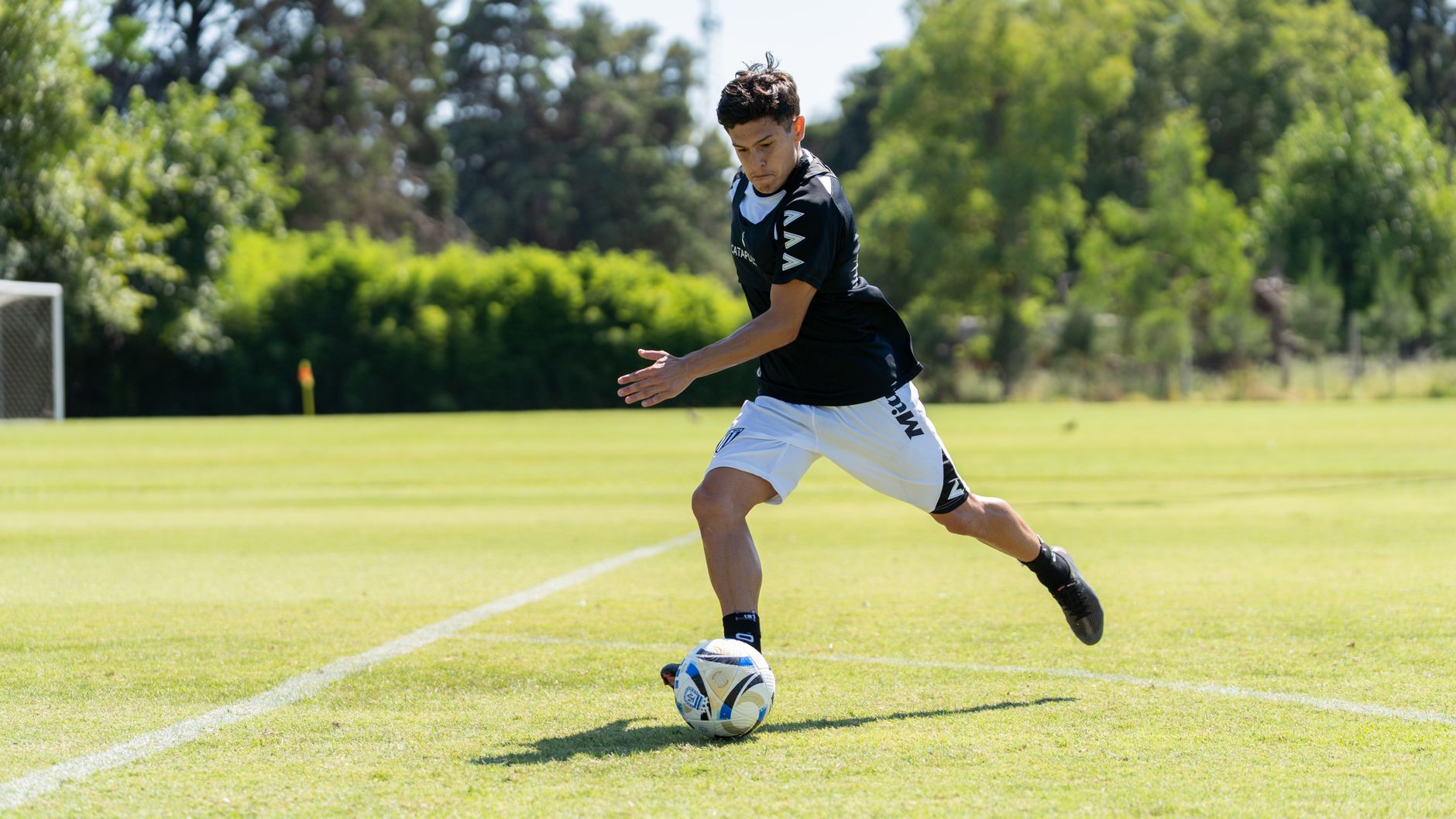
Photo by Franco Monsalvo on Pexels
The operational edge is to schedule high-speed work before fatigue-heavy strength work. Perform short sprints, jumps, or reactive drills at the start, after warming up, then complete strength exercises. This preserves coordination and reduces the chance that exhausted technique turns a simple landing into an avoidable problem.
How We Ranked Them
The five football strength training plans were ranked according to transfer to football, recovery cost, accessibility, progression potential, and suitability across a full season. A plan that produces impressive soreness but damages sprint quality does not rank highly here. I have made that mistake enough times for both of us.
The scoring framework was:
- Football transfer: 30% — acceleration, deceleration, force production, balance, and contact ability.
- Recovery compatibility: 25% — whether the plan works beside matches and football practice.
- Progression: 20% — ability to increase load, speed, complexity, or quality.
- Accessibility: 15% — equipment, coaching, time, and cost requirements.
- Injury-risk management: 10% — movement control, workload flexibility, and sensible fatigue limits.
This is not a laboratory ranking of every possible program. It is a coaching-style recommendation for real players dealing with school, work, travel, poor sleep, hard pitches, and unpredictable match schedules. The World Health Organization recommends regular physical activity for health, but football performance demands more precise management than simply accumulating exercise minutes.
“Training should be individualized and progressively overloaded,” is the practical principle repeated across major strength and conditioning guidance, even when the wording differs between organizations. The point is not to worship a percentage chart. The point is to make the next useful training decision based on performance and recovery.
What should you track each week?
Track at least five items: completed sets, sprint quality, perceived exertion, soreness location, and sleep duration. You can also record jump height or broad-jump distance if you have a consistent testing setup, but do not turn every session into a testing day.
A simple readiness note might look like this:
| Marker | Green light | Caution | Reduce load |
|---|---|---|---|
| Sleep | 7–9 hours | 6–7 hours | Under 6 hours |
| Soreness | Mild and local | Noticeable stiffness | Altered running pattern |
| Sprint quality | Normal mechanics | Slightly slower | Clear speed loss |
| Motivation | Normal | Low | Irritable and flat |
| Joint symptoms | None | Mild discomfort | Sharp or worsening pain |
This is not a medical diagnosis. Pain that is sharp, persistent, worsening, or associated with swelling, weakness, or altered movement requires a qualified clinician. Training through every symptom is not toughness; it is often just poor accounting.

Photo by Tim Mossholder on Pexels
One useful edge case is the 48-hour rule. If a hard lower-body session causes heavy soreness that still changes your running mechanics after 48 hours, the next lower-body session should lose volume or intensity. Do not simply move it one day later if that creates a collision with sprinting or match play; rearrange the entire stress pattern.
Which Should You Pick?
Choose the full-body athletic plan if you are unsure, train three or four times per week, or need one program that covers the largest number of football demands. Choose the lower-body power plan if acceleration and jumping are clear weaknesses, the upper-body contact plan if physical duels expose you, and the minimal-equipment plan if facilities are limited.
Advanced players can combine elements, but combinations require restraint. A full-body plan plus two power sessions may be sensible during an off-season block, while the same setup during a congested match schedule may be foolish. Professional players often have massage, nutrition support, medical monitoring, and controlled training environments; copying their exercise list without their support system is not ambition, it is incomplete information.
During a typical 12-week off-season, divide training into three phases:
- Weeks 1–4: Foundation — moderate loads, movement quality, mobility, and tissue tolerance.
- Weeks 5–8: Strength and power — heavier compound lifts, jumps, short sprints, and progressive overload.
- Weeks 9–12: Football transfer — lower gym volume, faster movements, repeated sprint work, and sharper change of direction.
During the season, keep intensity reasonably high but reduce volume. Two short strength sessions can maintain much of your progress when matches and practice already provide substantial high-intensity work. This is where many players get it backward: they chase more exercises when what they need is better timing.
Get the broader match and player context before you adjust your program; the right physical emphasis depends on the role you actually perform.
Recovery, Nutrition, and Scheduling
A football strength training plan fails quickly when recovery is treated as decoration. Aim for consistent sleep, adequate food, hydration, and at least one lower-stress day each week. The exact calorie requirement depends on body size, age, training volume, and goals, but players trying to gain strength generally need enough total energy and approximately 1.6–2.2 grams of protein per kilogram of body weight daily, distributed across several meals.
Carbohydrates matter because football involves repeated high-intensity efforts. Place a carbohydrate-rich meal or snack before demanding training, and eat a balanced meal containing protein and carbohydrates afterward. Water may be adequate for shorter sessions, while long, hot, or highly sweaty sessions may justify electrolytes. Do not confuse expensive supplements with a complete diet.
Schedule hard lower-body lifting away from your most important speed exposure whenever possible. A useful arrangement is heavy lifting on Monday, speed on Tuesday, moderate power on Thursday, and a lower-volume strength session on Friday if the match is Sunday. If your match is Saturday, shift the schedule earlier and avoid turning Friday into a secret fitness test.
[Internal Link: football nutrition for training and match day] can help you build meals around your actual workload rather than copying a professional’s breakfast from a social media clip. The best plan is the one you can repeat when the weather is bad, the legs are tired, and motivation has wandered off.
Common Errors That Quietly Ruin Progress
The first error is chasing soreness. Muscle soreness is an unreliable measure of football improvement and can interfere with sprinting, technical work, and match readiness. The second is training only bilateral lifts; football is full of single-leg braking, rotation, awkward stances, and uneven force, so unilateral work deserves regular attention.
The third error is ignoring deceleration. Players often train acceleration because it feels exciting, then neglect the braking forces that control direction changes and protect tissues. Add low-volume deceleration drills, controlled split squats, Nordic hamstring progressions, calf strengthening, and lateral movement rather than waiting for a late-season problem.
The fourth error is treating the plan as permanent. Training age, competition level, playing surface, travel, school, work, and injury history change the correct dose. Reduce volume during congested weeks, maintain movement quality during stressful periods, and rebuild gradually after illness or time away.
Finally, stop copying famous athletes without asking what the exercise is solving. Cristiano Ronaldo, Kylian Mbappé, Patrick Mahomes, and other elite players operate in different roles and environments. Their routines may contain useful ideas, but your body, schedule, and football demands remain the final filter.
Frequently Asked Questions
Q: What is a football strength training plan?
A: A football strength training plan is a structured program combining resistance training, explosive power, sprint work, mobility, and recovery for football performance. Most recreational and developing players can begin with three strength sessions, two speed or football sessions, and one complete rest day weekly. The exercises should improve force production, acceleration, balance, contact control, and the ability to repeat high-intensity actions. A good plan also changes across the off-season, pre-season, and competitive season instead of using identical volume all year.
Q: How do you start a football strength training plan?
A: Start with two or three full-body sessions per week using squat, hinge, push, pull, single-leg, carry, and trunk exercises. Begin with 2–4 sets of 5–10 controlled repetitions, leaving one or two repetitions in reserve, then add load gradually when technique remains consistent. Include short acceleration drills only after a proper warm-up, and keep jump volume low enough that every landing stays quiet and stable. Beginners should spend the first two weeks learning movement patterns before increasing intensity.
Q: What is the difference between strength training and power training for football?
A: Strength training develops the ability to produce force, while power training develops the ability to produce force quickly. Squats, deadlifts, split squats, and presses commonly use heavier loads and controlled repetitions, whereas jumps, medicine-ball throws, Olympic-lifting variations, and short sprints emphasize speed. Football players need both because strength provides the potential force and power determines how rapidly it appears during acceleration, tackling, jumping, or changing direction. Heavy lifting should not be so fatiguing that it ruins high-speed work.
Q: Is lifting weights good for football players?
A: Yes, properly programmed weight training can improve strength, power, resilience, and physical performance for football players. Research and guidance from organizations such as the National Strength and Conditioning Association support progressive resistance training when load, technique, and recovery are managed appropriately. The concern is not lifting itself but poor timing, excessive volume, unsafe technique, and training to failure before matches. Footballers should prioritize useful movement patterns rather than bodybuilding volume that provides little transfer.
Q: Why does my football strength training plan stop working?
A: A plan usually stops working because progression, recovery, exercise selection, or total workload no longer matches the player’s current needs. Check whether loads have remained unchanged, whether sleep has declined, and whether football practice or matches have increased your weekly fatigue. Also assess whether sprint speed, jump quality, or movement control is worsening even if gym numbers rise. Reduce volume by 25–40% for a recovery week, then resume with a clearer progression instead of immediately adding more exercises.
Q: How much does a football strength training plan cost?
A: A football strength training plan can cost nothing if you use bodyweight exercises, outdoor sprints, and carefully selected home movements, while coaching or gym access may cost roughly $30–$200 per month depending on location and service. Equipment improves progression but is not essential during the first training phase. Adjustable dumbbells, resistance bands, a jump rope, and a stable step can cover many foundational needs. The most valuable investment is qualified instruction when technique, injury history, or advanced programming is uncertain.
Q: How many days should a footballer lift each week?
A: Most footballers should lift two or three days per week, with the exact number depending on age, experience, matches, and football practice. Three sessions work well during the off-season, while two shorter sessions often maintain strength during a competitive schedule. Avoid placing a demanding lower-body workout immediately before an important match or maximal sprint session. If soreness changes your running mechanics beyond 48 hours, lower the volume and review the weekly schedule rather than forcing the original plan.
The conclusion is straightforward: choose the smallest football strength training plan that improves your performance without damaging your ability to sprint, practice, or compete. Start with full-body strength, add controlled power work, train one leg at a time, track recovery, and adjust the load when football demands rise. The flashy routine is rarely the winning one. The repeatable routine usually is, believe it or not — I do.
Want to connect smarter training decisions with deeper football analysis and 2026 tournament coverage? Stadium View is built for that.