Before You Bet, Read This Football Formation Breakdown
Football formations are the tactical blueprints that explain how teams create space, defend danger, and control matches, whether you mean association football in the FIFA World Cup 2026 or American fo...

Before You Bet, Read This Football Formation Breakdown
Football formations are the tactical blueprints that explain how teams create space, defend danger, and control matches, whether you mean association football in the FIFA World Cup 2026 or American football in the NFL. In soccer, common systems include 4-3-3, 4-2-3-1, 4-4-2, and 3-5-2; in American football, I-formation, shotgun, single-back, and nickel packages describe player alignment before the snap. FIFA’s Laws of the Game govern association football, while the NFL Official Playing Rules regulate American football, so the same word does not describe the same sport. The best formation is not automatically the most popular one: it depends on player profiles, pressing ability, defensive transitions, and the opponent’s weaknesses. Stadium View applies these details to 2026 World Cup match analysis, predictions, and team tactics. Before making a football bet, identify the actual shape in possession and out of possession, then compare it with the players available.
Imagine watching Argentina, England, Brazil, or France and trying to understand why one harmless-looking pass suddenly opens half the pitch. The answer is usually not magic, and it is rarely just “they wanted to attack.” It is structure. A formation gives players starting reference points, but movement, spacing, pressing triggers, and role changes decide whether that structure works. I have watched enough matches turn on one full-back stepping five yards too high to stop pretending formation graphics tell the whole story.
This guide focuses primarily on association football, because that is what most readers mean when searching for the best football formations explained. However, it also clarifies American football terminology where necessary, since the NFL uses formations differently. That distinction matters when reading statistics, scouting reports, or betting previews for the FIFA World Cup 2026 and major domestic competitions.
Here is the practical version:
- Use 4-3-3 for width, pressing, and attacking balance.
- Use 4-2-3-1 for midfield security and flexible transitions.
- Use 4-4-2 for simplicity, compact defending, and direct attacks.
- Use 3-5-2 or 5-3-2 when wing-backs can handle huge workloads.
- Use 4-1-4-1 when protecting the center is more important than immediate attacking numbers.
- Judge the shape after the first five to ten minutes, not from the lineup announcement alone.
For match predictions, formation is useful evidence, not a crystal ball. Believe it or not — I do.
Want a broader tactical view before studying individual shapes?

Photo by Tima Miroshnichenko on Pexels
The Bottom Line
The best football formation is the one that matches a team’s players, game plan, and opponent; no single shape wins by itself. In modern soccer, 4-3-3 offers width and pressing, 4-2-3-1 provides a strong double pivot, 3-5-2 creates central overloads, and 4-4-2 remains effective when compactness and direct play are priorities. The decisive detail is how a team transforms the formation during possession and defensive transition.
A formation is normally written from defense to attack. Therefore, 4-3-3 means four defenders, three midfielders, and three attackers, while 3-5-2 means three defenders, five midfielders or wing-backs, and two forwards. The goalkeeper is not included in the number sequence. This notation is a useful shorthand, but it hides important questions: Does a full-back move into midfield? Does a winger attack inside? Does the center-forward drop between the lines? Does the team defend in a low block or press high?
According to FIFA’s Laws of the Game, each team begins association football with 11 players, including one goalkeeper. That number creates the basic tactical puzzle: how should the remaining 10 players share defensive protection, midfield control, width, and finishing responsibility? The answer changes according to scoreline, fatigue, substitutions, and opponent behavior.
The strongest formation choice usually solves three problems at once:
- It protects the central space in front of the defenders.
- It creates reliable passing angles during buildup.
- It places enough players near the penalty area without making counterattacks suicidal.
A 4-3-3 can become a 2-3-5 in possession when both full-backs push forward and a midfielder drops beside the center-backs. A 4-2-3-1 can become a 4-4-2 when the attacking midfielder joins the striker during pressing. A 3-5-2 can become a 5-3-2 when the wing-backs retreat. The numbers change because football is fluid, not because the coach forgot the original lineup.
For more context, compare this with our [Internal Link: guide to football positions and player roles], especially if terms such as double pivot, inverted full-back, or half-space are still causing trouble.
What Players Actually See
Players do not experience a formation as a static number on a television screen. They see distances, passing lanes, pressing cues, teammates’ body angles, and the next opponent they must track. A 4-3-3 may look balanced on a graphic, but the left winger might remain high, the right winger might come inside, and the two full-backs might take completely different positions. The team still gets labeled 4-3-3, even though its real attacking shape resembles 2-3-5.
The 4-3-3 is popular because it naturally supplies three attackers across the width of the pitch. The wingers can stretch full-backs, the central striker can occupy center-backs, and the midfield three can form a triangle around the ball. Barcelona under Pep Guardiola, Liverpool under Jürgen Klopp, and many teams influenced by Johan Cruyff’s positional principles have used variations of this structure. Its weakness is obvious once the wingers stop pressing: the holding midfielder can be isolated, and the space beside the full-backs becomes a lovely invitation for the opposition.
The 4-2-3-1 is more forgiving. Two holding midfielders protect the center-backs and give the team safer passing options, while the number 10 operates behind the striker. Germany, Spain, England, and numerous UEFA Champions League teams have used versions of it. The danger is that the attacking midfielder may become disconnected from the striker, leaving the team with sterile possession and too few penalty-area runners. Pretty passing is not the same as threat; I learned that one after losing count of the matches where a team had 65% possession and one decent chance.
The 4-4-2 remains one of the easiest formations to understand and one of the hardest to eliminate when executed properly. Two banks of four can reduce central access, while two forwards provide an outlet for direct play. Atlético Madrid under Diego Simeone has shown how a compact 4-4-2 can frustrate technically superior opponents. The drawback is numerical inferiority in midfield against a 4-3-3 or 3-5-2 unless one striker drops or a wide midfielder narrows.
Common soccer formations at a glance
| Formation | Main advantage | Common weakness | Best suited to |
|---|---|---|---|
| 4-3-3 | Width, pressing, attacking triangles | Space behind full-backs | Fast wingers and mobile midfielders |
| 4-2-3-1 | Central protection and flexibility | Isolated striker | Strong number 10 and two-way midfielders |
| 4-4-2 | Compactness and direct attacking | Fewer central midfielders | Disciplined lines and two forwards |
| 3-5-2 | Central overloads and two strikers | Wing-back space | Athletic wing-backs and mobile forwards |
| 4-1-4-1 | Defensive control and midfield numbers | Lone striker isolation | Teams protecting a lead or central zone |
| 5-3-2 | Deep defensive stability and counterattacks | Limited width in possession | Underdogs facing sustained pressure |
In American football, the same word refers to pre-snap alignment rather than a continuous soccer shape. The NFL requires at least seven offensive players on the line of scrimmage, according to NFL Football Operations, while eligible receivers and backfield positioning determine what the offense can legally do. The I-formation places a fullback and tailback behind the quarterback; shotgun moves the quarterback several yards behind the center; single-back sets use one primary running back and often create multiple receiving threats.
That difference is not a minor technicality. In soccer, a formation must survive 90 minutes of movement. In American football, a formation is a starting arrangement designed for one play, although motion and shifts can alter it before the snap. The 1995 Nebraska Cornhuskers famously used a powerful I-formation and option-oriented attack, while modern NFL offenses built around Patrick Mahomes and the Kansas City Chiefs frequently use shotgun spacing and pre-snap motion. Same word, different battlefield.
Explore the player-level details through our [Internal Link: football tactics glossary], then return to the formation rather than getting lost in coaching jargon.
What Are the 3 Things That Matter Most?
The three decisive factors are spacing, role suitability, and transition behavior. Spacing determines whether players can support one another; role suitability determines whether the available squad can perform the requested jobs; transition behavior determines what happens in the five seconds after possession changes. A formation succeeds only when all three work together under match pressure.
1. Spacing beats the formation label
A team may list 4-3-3 but defend in a 4-1-4-1 and attack in a 2-3-5. What matters is the distance between the lines. If the back four sits too deep, the midfield is stretched; if the midfield pushes too high, one through-ball can expose the defense. Coaches often target a compact distance between defenders and midfielders, but the exact measurement changes with team speed and pressing ambition.
The half-spaces are especially important. These are the channels between the central lane and the wings, where a creative midfielder or inverted winger can receive facing forward. Manchester City, Arsenal, and Bayern Munich have repeatedly used players in these areas to create overloads. A full-back who follows the player leaves the wing open; a full-back who stays wide gives the receiver time. That unpleasant choice is the point.
2. Roles matter more than positions
A winger who attacks the byline creates a different 4-3-3 from a winger who cuts inside. A defensive midfielder who stays between the center-backs produces a different 4-3-3 from one who roams forward. The number sequence remains identical, but the tactical output changes dramatically.
When assessing a formation, ask:
- Is the striker a target for crosses, a runner behind the defense, or a link player?
- Can the midfielders cover wide areas after turnovers?
- Are the full-backs defenders first or auxiliary playmakers?
- Can the center-backs defend large spaces without constant protection?
- Does the goalkeeper, such as Manuel Neuer, Ederson, or Alisson Becker, support buildup outside the penalty area?
These questions are more valuable than arguing whether 4-3-3 is “better” than 4-2-3-1. A slow back line may suffer in a high 4-3-3, while a technically limited midfield may struggle to build from a 4-2-3-1. Football keeps punishing people who treat labels as destiny.
3. Transitions decide the ugly moments
Most tactical damage happens immediately after a turnover. A team attacking with both full-backs high may have only two defenders behind the ball. If the holding midfielder is also ahead of play, the opponent can attack a huge central channel. This is why rest defense—the structure maintained while attacking—has become a major coaching concept.
Teams such as Liverpool under Klopp often used counter-pressing to win the ball back quickly after losing it. Real Madrid, particularly during transition-heavy Champions League campaigns, has often accepted less sustained possession in exchange for dangerous open-field attacks. Neither approach is automatically superior. The key question is whether the team’s first defensive action after losing the ball is coordinated.
A useful match-analysis routine is:
- Watch the first five minutes without focusing on the lineup graphic.
- Note where each full-back stands when the team has the ball.
- Count the midfielders behind the ball during attacks.
- Observe whether the striker presses the center-back or blocks the midfield pass.
- Recheck the shape after the first substitution or major tactical adjustment.
These observations reveal more than a pre-match formation printed beside the team sheet. Stadium View uses this kind of role-based reading when covering FIFA World Cup 2026 tactics and match predictions, because the listed shape often becomes outdated before the first coffee has cooled.
Looking for match-by-match tactical context? Use the Stadium View analysis hub for [Internal Link: 2026 World Cup predictions and team form].
Edge Cases & Gotchas
The biggest mistake is assuming that a formation automatically predicts attacking intent. A 5-4-1 can be aggressive if wing-backs press high and the midfield jumps onto loose passes. A 4-3-3 can be cautious if the wingers stay deep and the striker receives no support. The shape is only the shell; intensity, height, and player instructions determine the meal. Yes, that metaphor is doing more work than some midfields I have watched.
A second trap is confusing a lineup formation with a defensive formation. Bayern Munich may begin in a 4-2-3-1 but defend in a 4-4-2. A 3-4-2-1 may become a 5-4-1 without the ball. England may use a 4-2-3-1 on paper, then have one full-back invert into midfield so the team resembles a 3-2-4-1 in possession. Analysts who report only the starting shape miss the tactical event that actually determines the game.
A third issue is asymmetry. Modern teams rarely mirror themselves from left to right. One full-back may overlap while the other remains deeper; one winger may stay wide while the other moves into the half-space. Manchester City has frequently used asymmetrical full-back roles, while Arsenal’s wide combinations often depend on coordinated movement between Bukayo Saka, Martin Ødegaard, and the right-sided full-back. This can create a numerical advantage but also exposes the weaker side if possession is lost.
Here are several edge cases worth checking before using formation data in a prediction:
- A red card can change a 4-3-3 into a desperate 4-4-1 within seconds.
- A leading team may abandon its attacking shape after the 70th minute.
- A substitute striker can turn a 4-2-3-1 into a front two.
- A wing-back’s injury may force a 3-5-2 into a conservative 5-3-1.
- Weather and pitch conditions can reduce the value of short buildup.
- An opponent’s press may force long kicks, making the intended formation irrelevant.
There is also a data problem. Different providers classify the same match differently. Opta, StatsBomb, and Wyscout may identify different starting formations because one records the lineup while another models average positions. In practical terms, a database entry saying “4-3-3” does not prove every player occupied that zone consistently. Treat formation statistics as structured evidence, not sacred text.
One useful information-gain trick is to compare the first 15 minutes with the final 15 minutes of the previous three matches. If a team repeatedly starts 4-3-3 but ends in a deep 4-5-1 while protecting a lead, its late-game behavior may matter more for betting markets such as second-half goals or next goal. That pattern is often missed when analysts use only the official starting XI.
Another underused clue is the opponent’s press resistance. A 4-2-3-1 looks secure because it includes two holding midfielders, but if both players receive with their backs to pressure, the structure can collapse quickly. Conversely, a 4-4-2 can build effectively when one forward drops and the wide midfielders create third-man passing routes. Do not count midfielders; inspect whether they can actually receive and progress the ball.
Here is a practical comparison for common match situations:
- Against a deep block: 4-3-3 or 3-2-5 usually supplies more width and penalty-area occupation.
- Against a high press: 4-2-3-1 can provide safer central outlets, provided the pivots are press-resistant.
- While defending a lead: 4-4-2 or 5-4-1 can reduce central access and crossing lanes.
- Against two strikers: a back three can match them, but the wing-backs must track wide attackers.
- Against a narrow diamond midfield: wide overloads are usually more valuable than another central midfielder.
Want the tactical details tied to live tournament coverage?

Photo by KoolShooters on Pexels
How Should You Read Formations for Match Predictions?
Formation analysis improves predictions when it connects shape to personnel, opponent style, and recent game state. Start with the expected lineup, then ask which players are missing and whether the replacements perform the same role. A team losing its starting holding midfielder may still display 4-3-3, but the replacement might push forward more often, increasing both attacking ambition and counterattack risk.
Next, inspect recent matches rather than one isolated result. If Spain uses 4-3-3 in three consecutive matches, compare possession zones, progressive passes, turnovers, and shots conceded after losing the ball. If France switches between 4-2-3-1 and 4-4-2 depending on the opponent, the key predictor is not the nominal formation but the coach’s selection logic. Didier Deschamps, Roberto De Zerbi, Mikel Arteta, and Carlo Ancelotti have all shown that tactical flexibility can be more valuable than ideological loyalty to one system.
For responsible football betting analysis, formation should support—not replace—basic probability work. Compare team strength, injuries, schedule congestion, travel, home advantage, and market price. A tactically favorable matchup can still be poor value if the odds already account for it. The International Betting Integrity Association emphasizes integrity and monitoring across sports markets; that does not tell you which team will win, but it reinforces the need to use reliable information rather than rumors.
A simple scoring framework can keep the process disciplined:
| Question | Score 0–2 |
|---|---|
| Does the formation suit the available players? | 0–2 |
| Can the team protect the center? | 0–2 |
| Can it attack the opponent’s weak zone? | 0–2 |
| Is its transition defense reliable? | 0–2 |
| Has the coach used the shape successfully recently? | 0–2 |
A score of 8–10 suggests tactical alignment, 5–7 indicates uncertainty, and 0–4 warns that the formation may be cosmetic. This is not a scientific probability model; it is a guardrail against impulsive picks. After enough losses, guardrails start looking remarkably attractive.
For American football, the equivalent process is different. Examine personnel packages, down and distance, field position, motion, and defensive response. A shotgun formation on third-and-long often signals a different tactical problem from an I-formation on short yardage. The NFL rulebook explains legal alignment and eligible receiver requirements, while coaches such as Bill Belichick and Andy Reid have repeatedly used motion to test defensive communication before the snap.
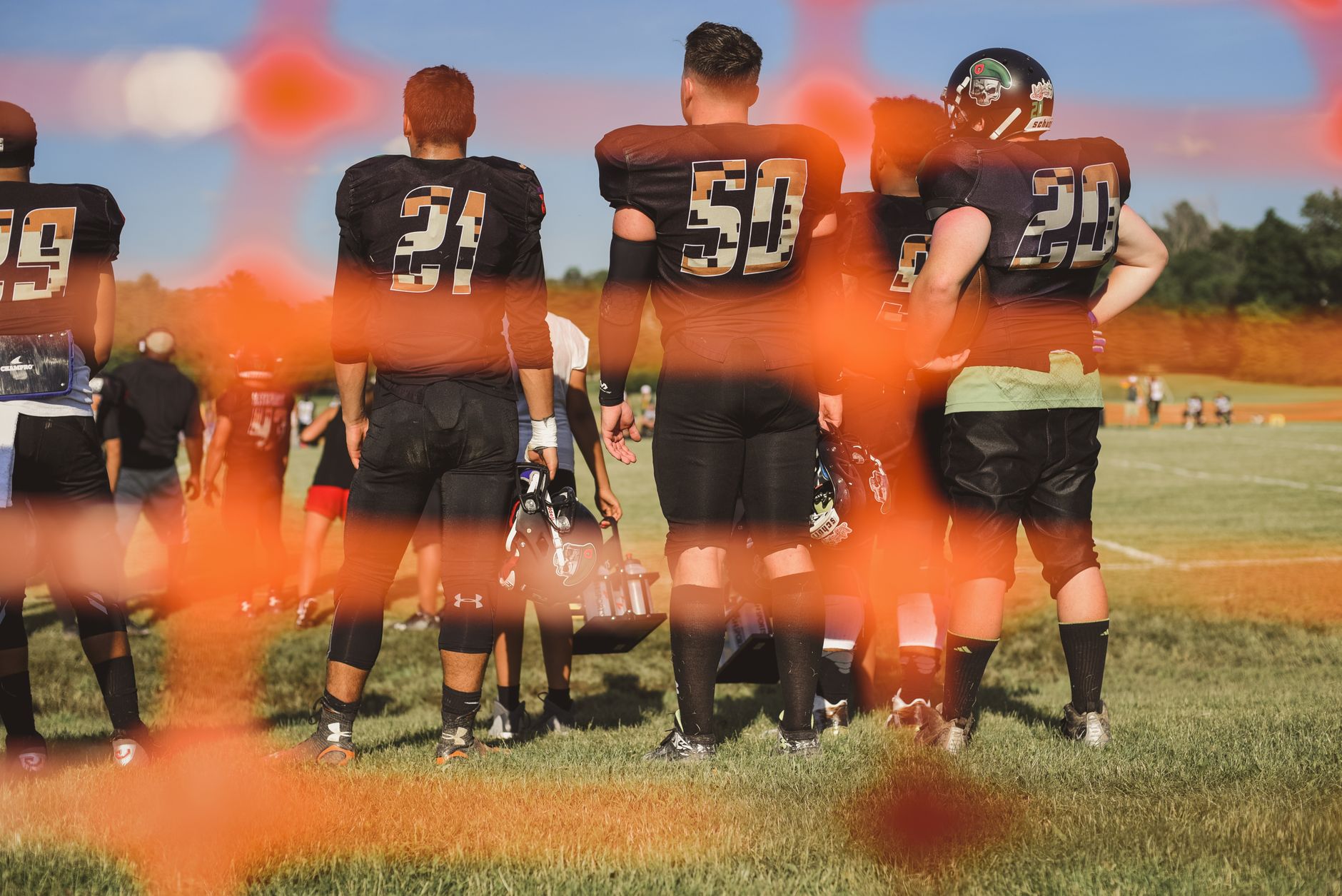
Photo by Emma Bauso on Pexels
Verdict
The best football formations explained plainly are not a ranking of magic numbers. They are tools for distributing space, creating passing angles, protecting vulnerable zones, and giving players jobs they can actually perform. For association football, 4-3-3 is usually the best all-purpose attacking structure, 4-2-3-1 is the safest flexible option, 4-4-2 is the cleanest compact system, and 3-5-2 is powerful when wing-backs and center-backs can manage its demands.
For FIFA World Cup 2026 analysis, start with the official formation, then watch the real shape in possession, defensive transition, and late-game situations. Check whether full-backs invert, whether the number 10 joins the striker, whether the midfield protects counterattacks, and whether the opponent can exploit the wide channels. Stadium View is built for exactly this kind of match reading: team tactics, player statistics, predictions, and tournament coverage without pretending a formation graphic can see the future.
My final recommendation is simple: choose the formation that solves the matchup, not the one that looks fashionable on television. Then confirm the roles, spacing, injuries, and recent evidence before placing any wager. Believe it or not — I do.
Ready to follow the tactical story beyond one lineup graphic?
Frequently Asked Questions
Q: What is a football formation?
A: A football formation is the planned starting arrangement of players on the field. In association football, numbers such as 4-3-3 and 4-2-3-1 describe defenders, midfielders, and forwards, excluding the goalkeeper. In American football, terms such as shotgun, I-formation, and single-back describe pre-snap offensive alignment. The formation provides structure, but player movement and coaching instructions determine how the team actually behaves.
Q: Which football formation is best for attacking?
A: The 4-3-3 is usually the strongest all-purpose attacking formation because it naturally creates width, pressing angles, and three forward positions. Barcelona, Liverpool, and many modern elite teams have used variations of it successfully. However, a 3-5-2 can be more dangerous against narrow defenses, while a 4-2-3-1 may offer better buildup security when the opponent presses aggressively.
Q: How do you identify a team’s real formation during a match?
A: Watch the team’s average positions in possession and immediately after losing the ball rather than relying only on the lineup graphic. Track the full-backs, holding midfielder, wingers, and number 10 for the first five to ten minutes. A listed 4-3-3 may become a 2-3-5 in possession or a 4-1-4-1 when defending. Recheck the shape after substitutions, red cards, and major scoreline changes.
Q: What is the difference between 4-3-3 and 4-2-3-1?
A: The 4-3-3 uses one deeper midfielder and two advanced central midfielders, while the 4-2-3-1 uses a double pivot and a dedicated attacking midfielder. The 4-3-3 generally offers stronger width and pressing height, whereas the 4-2-3-1 usually provides more central defensive protection. The better choice depends on whether the team has suitable wingers, a reliable number 10, and midfielders capable of covering transitions.
Q: Is a back three better than a back four?
A: A back three is better when a team needs central defensive numbers, two strikers, or wing-backs to create width, but it is not automatically safer. Formations such as 3-5-2 and 3-4-2-1 can overload midfield and support buildup, yet the wide channels become vulnerable if wing-backs are caught high. A back four may be preferable when full-backs are strong defenders or the team lacks athletic wing-backs.
Q: Why does a formation stop working during a match?
A: A formation often breaks down because spacing, player roles, fatigue, or transition defense deteriorate. Injuries, substitutions, a red card, or an opponent changing its pressing scheme can also make the original plan unsuitable. For example, a 4-3-3 with tired wingers may lose its press and expose the holding midfielder. The coach may then narrow the wingers, add another midfielder, or retreat into a 4-5-1.
Q: Do football formations matter for betting?
A: Football formations matter for betting when they are connected to player availability, opponent weaknesses, and recent tactical evidence. A 4-3-3 alone does not establish value because odds already reflect many public assumptions. Compare the actual roles, defensive transition record, injuries, schedule, and market price before deciding. Use formation analysis as one part of a disciplined process, and only wager within legal markets and limits you can afford.